












Skip to content
Marc Nashaat Consulting Start a conversation

SEO Content Strategy

SEO content strategy is demand, search intent and topical authority. It is not content design, taxonomy work or CMS governance. What you get is a decision on what to publish, consolidate and retire, measured against pipeline rather than sessions.

SEO Content Strategy programs for Adobe belairdirect FacilityOS Famous Smoke Inpixon Fire & Flower

Overview

What is SEO content strategy?

SEO content strategy is the discipline of deciding what a site should publish, consolidate or retire based on search demand, the intent behind that demand, and the topical coverage a domain needs before search engines treat it as credible on a subject. It is distinct from content design and content operations, which govern interface copy, taxonomy, component models and CMS workflow. Both are legitimate disciplines; they answer different questions. This one starts from what people search and what those searches are worth.

The artifacts are a demand and intent map tied to the roles inside a buying committee, a cluster model of pillar and supporting pages, an internal linking plan that makes the coverage legible to crawlers and retrieval systems, and a portfolio decision for every existing URL. Success is measured in pipeline influence, and briefs are grounded in the objections sales actually hears rather than in a keyword and a word count.

Who it's for

You probably need this if…

  • 01You rank for your own category term and lose every comparison, alternatives and pricing search.
  • 02Sales answers the same five objections every week and your site addresses none of them.
  • 03You have three pages targeting the same query and Google keeps picking the weakest one.
  • 04Your content plan is a spreadsheet of keywords sorted by volume, with no order of operations.

Key principles of SEO content strategy

Demand and intent mapping

Enterprise purchases are decided by several people with conflicting questions — a champion, an economic buyer, a security or procurement reviewer, an end user. Each searches in different language and they rarely share a page. Mapping queries to roles, and to the stage of the decision they belong to, is what turns a keyword list into a plan.
Topical authority and clusters

Search engines assess a domain's credibility on a subject across the whole corpus rather than page by page. A pillar page, supporting articles that each own exactly one question, and deliberate links between them make that coverage legible — and give a model retrieving your content a coherent body of work to quote from.

Internal linking models

Links are how authority moves and how a crawler infers relationships between pages. A cluster with no linking model is a folder of orphans. The version that holds is a rule — which page types link to which, in what anchor language, from templates rather than by hand — so the model survives the next thousand URLs.

Portfolio decisions

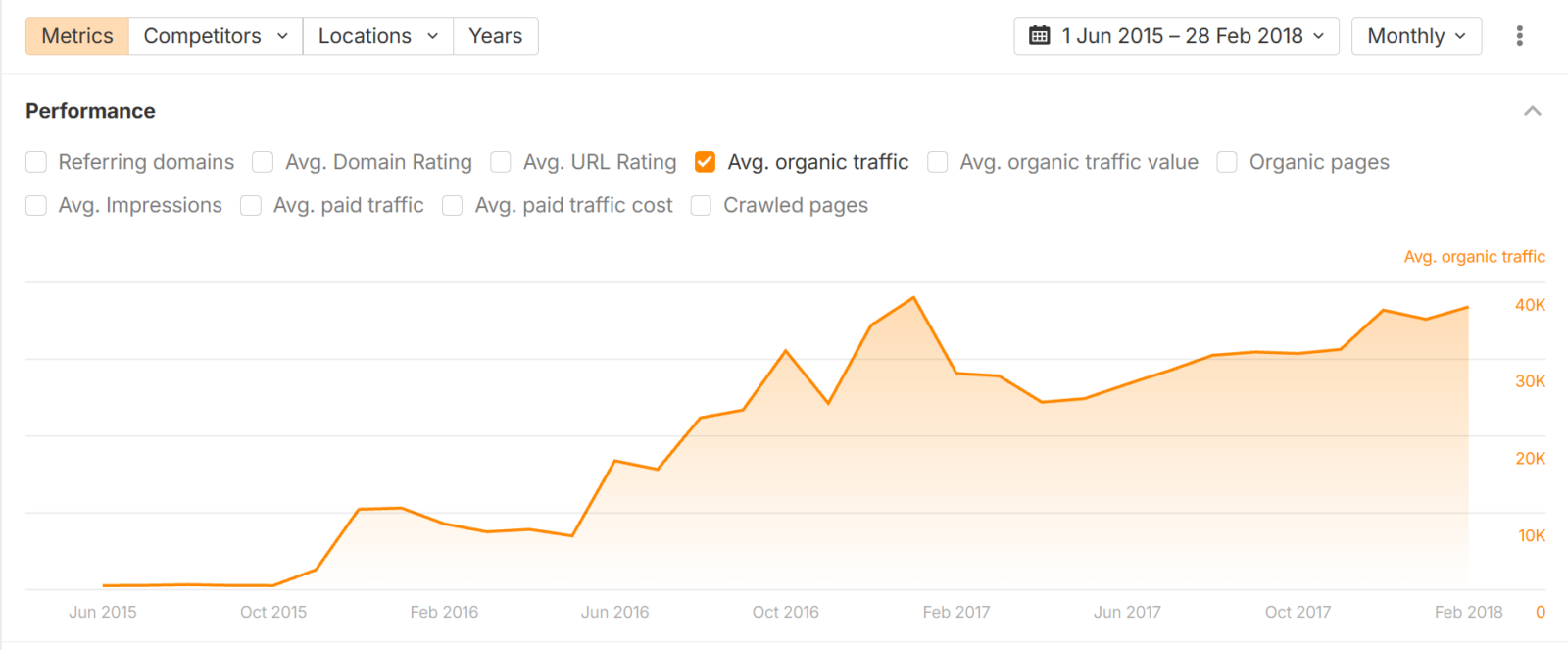
Every plan carries four verbs: build, consolidate, rewrite, retire. On a site with years of archive behind it, consolidation and retirement routinely move rankings faster than new publishing does, because they stop near-identical pages competing with each other for the same query. Deciding what not to publish is the half of strategy most plans skip.

What's included

A topic map, not a keyword list.

Demand & intent mapping

Query data, sales-call language and competitor coverage clustered into the questions each member of your buying committee asks, mapped to decision stage.

Cluster & authority model

Pillar and supporting pages defined per topic, with the internal linking rules that make the coverage readable to crawlers and retrieval systems.

Portfolio calls

Build, consolidate, rewrite or retire: a decision for every existing URL that competes with the plan, scored on revenue potential rather than volume.

Executable briefs

Angle, structure, evidence, internal links and the exact search each piece is meant to win. No blank-page guessing, no word-count targets.

Not sure which of these you actually need?

Request a discovery call

Process

How I approach SEO Content Strategy

  1. 1

    Evidence

    Query data, CRM language, win/loss themes and interviews with your sales team.

  2. 2

    Intent map

    Clusters scored by commercial value and difficulty, mapped to committee role and stage.

  3. 3

    Portfolio plan

    Build, consolidate and retire calls across the estate, with briefs for the first wave.

  4. 4

    Hand over

    Brief format, linking rules and QA installed with your team, then reviewed at 30 and 90 days.

FAQ

Common questions

Is this content strategy or content design?

If what you need is taxonomy, component models, voice guidelines or CMS governance, that is content design and content operations. Content strategy invovles deciding what gets published and why, based on demand and what it can earn.

How is this different from a keyword list?

A keyword list tells you what to type. This tells you what to build, what to merge, what to delete and in what order, scored by what each cluster can earn rather than by how many people search it.

How long before it shows up in pipeline?

Rankings in weeks on an established domain. Pipeline contribution usually a quarter or two, depending on your sales cycle. I will give you that expectation before we start rather than after, including if your domain cannot yet carry the plan.

Do we have to stop publishing while you work?

No. Keep the calendar running on anything already briefed. What changes is what gets commissioned from week three onward, and probably how much of the archive survives the portfolio review.

Related resources

What is your content actually meant to win?

Send me your domain and the search you most want to own. I will tell you if it is reachable. I reply personally within 48 hours.